

The InnKeeper's Personality Profiles
MBTI:
There are many different personality typing systems available, but they are not all created equal. Some are better than others, although all are limited in scope. The typing system that I am most familiar with is the Meyers-Briggs Type Indicator system, which is based on a theory of personality types that was created by psychologist Carl Jung. The MBTI system is has been the subject of legitmate criticsm, and I do not debate its validity here. I explain a little about what it claims to do and I describe my own type because I believe it fits me and anyone else who is familiar with both MBTI and myself also believe it fits me, so it is a convenient shortand to describing or explaining certain aspects of who I am. I have read all the other types and I have picked out the one that most accurately describes the person I see myself as. So you may want to take the system with a grain of salt, but regardless of how my Personality Type was derived, and whether anyone who knows me is familiar with the MBTI, the category I will talk about here is how most would describe me.
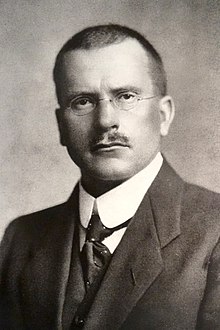 Jung believed that there were two basic kinds of "functions" which humans used in their lives: how we take in information (how we "perceive" things), and how we make decisions. He believed that within these two categories, there were two opposite ways of functioning. We can perceive information via 1) our senses, or 2) our intuition. We can make decisions based on 1) objective logic, or 2) subjective feelings. Jung believed that we all use these four functions in our lives, but that each individual uses the different functions with a varying amount of success and frequency. He believed that we could identify an order of preference for these functions within individuals. The function which someone uses most frequently is their "dominant" function.
Kathryn Briggs worked with Jung's theories and developed them further, but her daughter, Isable Briggs Meyers, is responsible for the version of the MBTI that we use today. She developed the theory that every individual has a primary mode of operation within four categories: 1) our flow of energy; 2) how we take in information; 3) how we prefer to make decisions; 4) the basic day-to-day lifestyle that we prefer. This forms the basis of the MBTI system. Like Jung, it assumes there are two opposite ways of functioning for each category and, also like Jung, it is not an either/or dichotomy, but a sliding scale.
We all naturally use one mode of operation within each category more easily and more frequently than we use the other mode of operation. So, we are said to "prefer" one function over the other. The combination of our four "preferences" defines our personality type. Although everybody functions across the entire spectrum of the preferences, each individual has a natural preference which leans in one direction or the other within the four categories.
One common misunderstanding is that this scale leads to a binary conclusion or binary categories. Some people have attempted to compensate for this dichotomy by creating third categories "in between" the two extremes, but that's not how the MBTI scale system works. It's more like having a preference for handedness. Everyone who has two working hands uses both of their hands to one degree or another, but most people have a dominant hand - the hand that they use more often or that is better skilled than the other.
If we were to place our hand usage on a scale, we might determine that we use our right hand 85% of the time and our left hand 40% of the time. That doesn't add up to 100% because each hand is evaluated independently. Sometimes we use both hands simultaneously. But the right hand is used more often, or it is more comfortable to use the right hand more often, or the right hand is more skilled, so that would make us right-handed, even though the left hand is also used often or is able to complete tasks well. But most scales show a linear progression from one option to the other, and that contributes to the misunderstanding of the typing systems as binary or dichotomous when they're not.
The analogy deviates from the comparison because there is a generally accepted category of "ambidextrous" people who use both hands more or less equally, but the way that the MBTI and Jungian theories are written, they do not include any "middle" categories because of their sliding scale feature, contrary to some online pop psychology articles, which misunderstand the underlying theories from a research perspective.
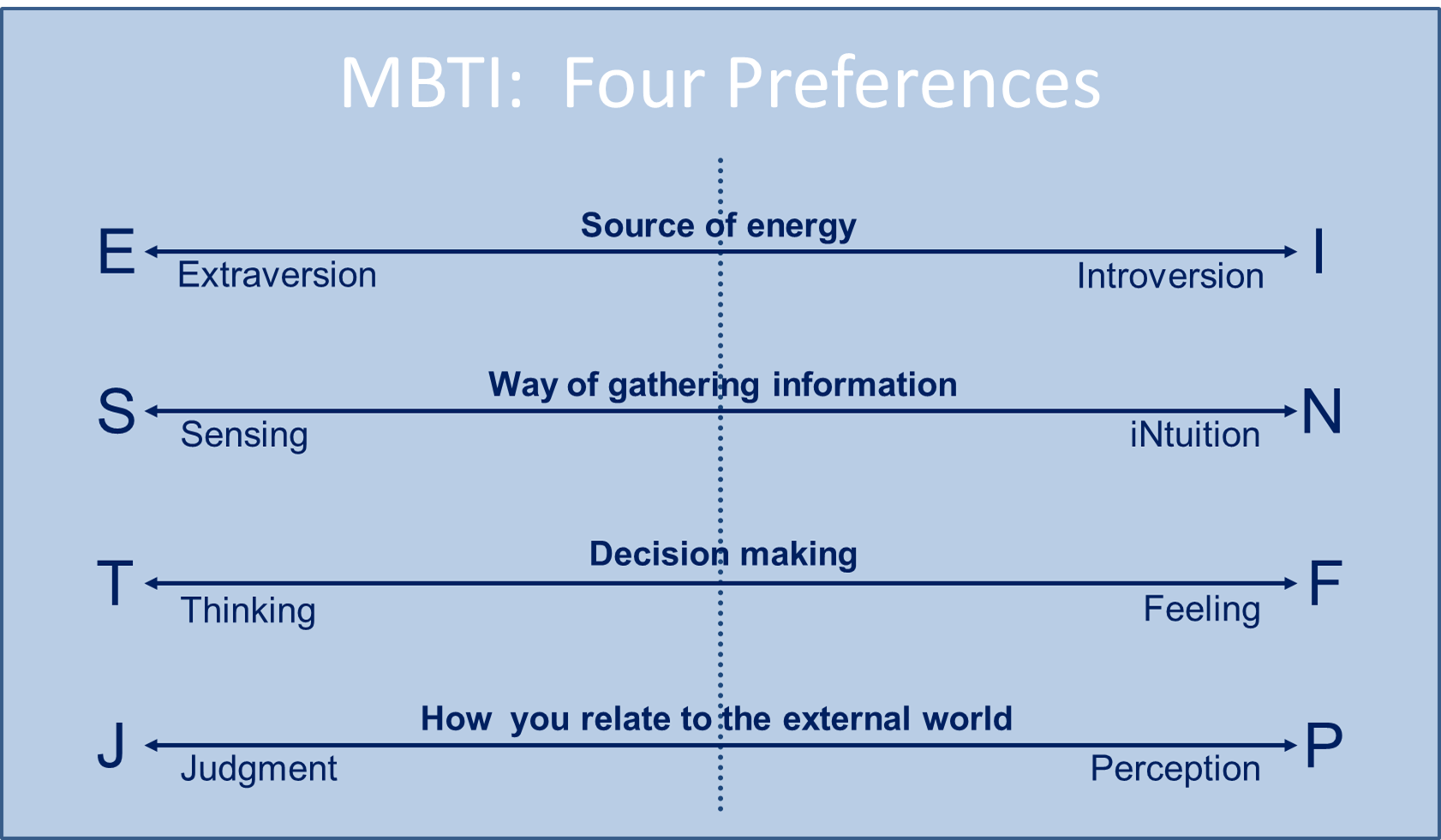
Our Source of Energy defines how we receive the essential part of our stimulation. Do we receive it from within ourselves (Introverted) or from external sources (Extraverted)? Is our dominant function focused externally or internally? (I swear, contrary to the language use, this is not New-Agey mystic "energy flow", "chi", "qi", or "quantum connection to the universe". It means, do we feel energetic after interacting with people or do we feel tired? Do we feel energetic from introspective pursuits or do we feel stifled?)
The topic of how we Gather Information deals with our preferred method of taking in and absorbing information. Do we trust our five senses (Sensing) to take in information, or do we rely on our instincts (iNtuitive)?
The third type of preference, Decision making, refers to whether we are prone to decide things based on objective consideration (Thinking), or based on our personal, subjective value systems (Feeling). Both are logical processes. We are evaluating a set of criteria to arrive at a conclusion. The question is, which criteria do we place a higher priority on, objective criteria or subjective criteria? When buying a house, is it more important to evaluate the cost per square footage or how comfortable you feel in the house?
The fourth preference is concerned with how we deal with the external world on a day-to-day basis. Are we organized and purposeful, and more comfortable with scheduled, structured environments (Judging), or are we flexible and diverse, and more comfortable with open, casual environments (Perceiving)?
It should be noted here that many words used in highly specialized fields like psychology do not have the same meaning that those same words do in common useage. In this context, words like "judging" does not mean someone is judgemental or judges other people. "Introverted" does not mean shy or lacking in social skills, while "Extraverted" does not mean having good social skills.
Another important note is on the question of whether someone can "change" types as they age. The general consensus among personality type researchers is no. We are all born with one type and that type remains our type for our entire lives. However, much of what the various type systems discuss are behaviours and behaviours can be learned.
The human brain is incredibly malleable and can learn to perform activities with varying degrees of ease. People can also learn to appreciate preferences that are not their natural preferences, such as learning to appreciate art or developing an acquired taste in foods, so that it might seem like we have changed over time. But what we have done is added layers on top of our base personality. If we have learned something early and we acquired a level of proficiency at it, we might even have difficulty telling this learned behaviour apart from our "natural preference". This is often the reason for why some people feel that their type has changed or that some quizzes can guess them "wrong".
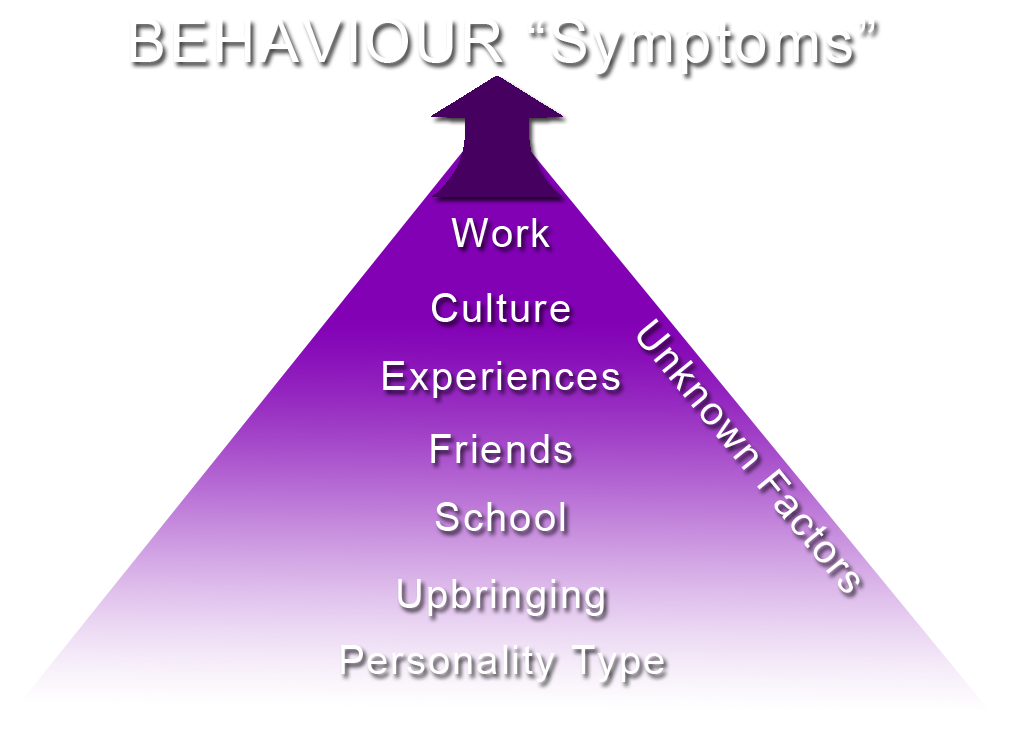
An excellent visual example of the layers that contribute to our behaviour that we often misidentify as "personality" is the Behaviour Pyramid. Here we can see that we have a base personality type, and then we are influenced as we age by external pressures, which all get compressed together until they are expressed at the top as behaviours. We might call our behaviours "symptoms" of our personality and of all the other things that influence us in our lives. If we are looking at behaviours alone, these collective behaviours might make it difficult to figure out what parts of ourselves that make us who we are might be innate personality and what parts might be learned from external influences. Systems like MBTI seek to discover that bottom layer, the innate personality.
©Step Research
So, back to the Four Preferences. With four categories having two options, that gives us a total of 16 letter combinations to make up the personality types found within the MBTI. I am an INTJ. That means that I am Introverted, iNtuitive, Thinking, Judging. But unless we discuss where I am on the scale, like in the handedness example above, that still only shows you a partial picture.
I am very strong on Introversion and Thinking, but I have a very weak preference for iNtuitive and Judging. So what this means is that the shorthand for my personality profile is that I am an INTJ, but there is a very specific part of the description of ISTP that also fits me often enough for it to be noteworthy.
Now that the explanation of MBTI is out of the way, I will explain exactly what an INTJ/istp is in practical terms. You can learn more about MBTI here.
The following is taken from TypeLogic:
INTJ:
To outsiders, INTJs may appear to project an aura of "definiteness", of self-confidence. This self-confidence, sometimes mistaken for simple arrogance by the less decisive, is actually of a very specific rather than a general nature; its source lies in the specialized knowledge systems that most INTJs start building at an early age. When it comes to their own areas of expertise -- and INTJs can have several -- they will be able to tell you almost immediately whether or not they can help you, and if so, how. INTJs know what they know, and perhaps still more importantly, they know what they don't know.
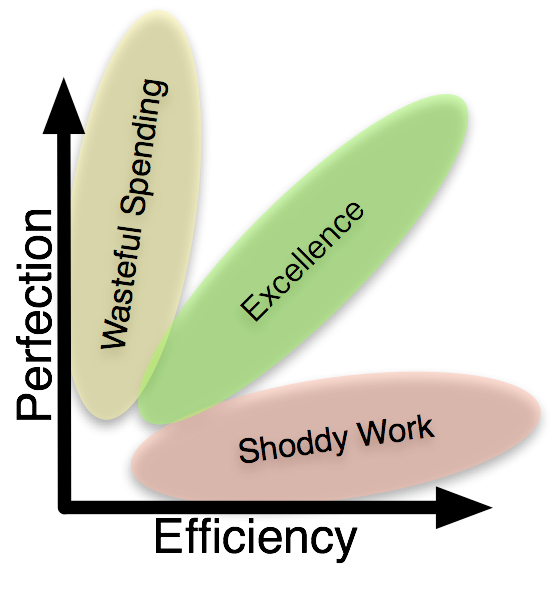 INTJs are perfectionists, with a seemingly endless capacity for improving upon anything that takes their interest. What prevents them from becoming chronically bogged down in this pursuit of perfection is the pragmatism so characteristic of the type: INTJs apply (often ruthlessly) the criterion "Does it work?" to everything from their own research efforts to the prevailing social norms. This in turn produces an unusual independence of mind, freeing the INTJ from the constraints of authority, convention, or sentiment for its own sake.
INTJs are known as the "Systems Builders" of the types, perhaps in part because they possess the unusual trait combination of imagination and reliability. Whatever system an INTJ happens to be working on is for them the equivalent of a moral cause to an INFJ; both perfectionism and disregard for authority may come into play, as INTJs can be unsparing of both themselves and the others on the project. Anyone considered to be "slacking," including superiors, will lose their respect -- and will generally be made aware of this; INTJs have also been known to take it upon themselves to implement critical decisions without consulting their supervisors or co-workers. On the other hand, they do tend to be scrupulous and even-handed about recognizing the individual contributions that have gone into a project, and have a gift for seizing opportunities which others might not even notice.
In the broadest terms, what INTJs "do" tends to be what they "know". Typical INTJ career choices are in the sciences and engineering, but they can be found wherever a combination of intellect and incisiveness are required (e.g., law, some areas of academia). INTJs can rise to management positions when they are willing to invest time in marketing their abilities as well as enhancing them, and (whether for the sake of ambition or the desire for privacy) many also find it useful to learn to simulate some degree of surface conformism in order to mask their inherent unconventionality.
Personal relationships, particularly romantic ones, can be the INTJ's Achilles heel. While they are capable of caring deeply for others (usually a select few), and are willing to spend a great deal of time and effort on a relationship, the knowledge and self-confidence that make them so successful in other areas can suddenly abandon or mislead them in interpersonal situations.
This happens in part because many INTJs do not readily grasp the social rituals; for instance, they tend to have little patience and less understanding of such things as small talk and flirtation (which most types consider half the fun of a relationship). To complicate matters, INTJs are usually extremely private people, and can often be naturally impassive as well, which makes them easy to misread and misunderstand. Perhaps the most fundamental problem, however, is that INTJs really want people to make sense. This sometimes results in a peculiar naivete', paralleling that of many Fs -- only instead of expecting inexhaustible affection and empathy from a romantic relationship, the INTJ will expect inexhaustible reasonability and directness.
Commentary: I actually really enjoy flirtation, but I often lack the ability to tell when the flirtation is provided with intention, without having a serious, in-depth conversation with that individual where we discuss our methods of flirtation and when we mean what we say and when it's part of the social joking around. Part of the difficulty with grasping social rituals means that I also do not have a strong attachment to holidays, so things like anniversaries and special occasions do not tend to mean very much to me. However, being schedule-oriented, if a *date* is made with me, whether it's on a holiday or not, I become very attached to the schedule with that date, and a change in the schedule provokes strong distress or upset.
Probably the strongest INTJ assets in the interpersonal area are their intuitive abilities and their willingness to "work at" a relationship. Although as Ts they do not always have the kind of natural empathy that many Fs do, the Intuitive function can often act as a good substitute by synthesizing the probable meanings behind such things as tone of voice, turn of phrase, and facial expression. This ability can then be honed and directed by consistent, repeated efforts to understand and support those they care about, and those relationships which ultimately do become established with an INTJ tend to be characterized by their robustness, stability, and good communications.
ISTP (those parts that apply to me):
ISTPs are fundamentally Performers, but as Ts, their areas of interest tend to be mechanical rather than artistic, and they do not present an impression of constant activity. On the contrary, they lie dormant, saving their energy until a project or an adventure worthy of their time comes along--and then they launch themselves at it. The apparently frenzied state that inevitably ensues is actually much more controlled than it appears--ISTPs always seem to know what they're doing when it comes to physical or mechanical obstacles--but the whole chain of events presents a confusing and paradoxical picture to an outsider.
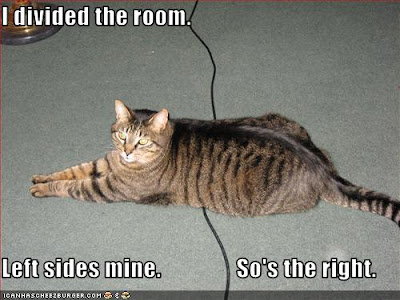 ISTPs are equally difficult to understand in their need for personal space, which in turn has an impact on their relationships with others. They need to be able to "spread out"--both physically and psychologically--which generally implies encroaching to some degree on others, especially if they decide that something of someone else's is going to become their next project. (They are generally quite comfortable, however, with being treated the same way they treat others--at least in this respect.) But because they need such a lot of flexibility to be as spontaneous as they feel they must be, they tend to become as inflexible as the most rigid J when someone seems to be threatening their lifestyle (although they usually respond with a classic SP rage which is yet another vivid contrast to their "dormant," impassive, detached mode). These territorial considerations are usually critical in relationships with ISTPs. ISTPs are masters of the one-liner, often showing flashes of humor in the most tense situations; this can result in their being seen as thick-skinned or tasteless.
ISTPs often gravitate towards classes in industrial arts; part-time vocational/ technical programs can be useful to even the college-bound ISTP. In terms of careers, mechanics and any of the skilled trades are traditional choices, and those ISTPs with strong numerical as well mechanical gifts tend to do extremely well in most areas of engineering. Working as paramedics or firefighters can fulfill the ISTP need to live on the edge; they are at their best in a crisis, where their natural disregard for rules and authority structures allows them to focus on and tackle the emergency at hand in the most effective way.
David Kerisey's Temperments:
David Keirsey created a system of four "temperments", each with two "role variants" that closely correlates to the MBTI system, but with some significant differences. Within the Temperment system, I am still an INTJ (The Mastermind), with borderline S and P preferences, but in this system, I am more closely aligned with the INTP (The Architect) than the ISTP (The Crafter). The reason why I fall into a borderline characterization with the ISTP/Crafter is because of my unique affinity with tools and machines, which is not common to the NTs - it's a trait of the SPs. But the Crafter is not structured enough, whereas the Architect, even though they both utilize the P (free-form, no schedules), is more structured and that fits me better.
Temperament is a configuration of observable personality traits, such as habits of communication, patterns of action, and sets of characteristic attitudes, values, and talents. It also encompasses personal needs, the kinds of contributions that individuals make in the workplace, and the roles they play in society. You can learn more about his Temperments system in the book Please Understand Me II. This is a separate and different system than the MBTI, but it is very similar and uses MBTI as its foundation. The first essential difference is that Keirsey describes observed long term behaviorial patterns, whereas Myers often describes what people have in mind. The second essential difference is Myers used a linear four factor model to characterize "invariant" patterns of behavior of the individual throughout their lifetime, whereas Keirsey uses a systems field theory model to characterize these patterns. (Read the the differences between MBTI & Keirsey's Temperments).

The following is taken from Keirsey.com:
The Rationals (equivalent to all MBTI types with NT):
Rationals are the problem solving temperament, particularly if the problem has to do with the many complex systems that make up the world around us. Rationals might tackle problems in organic systems such as plants and animals, or in mechanical systems such as railroads and computers, or in social systems such as families and companies and governments. But whatever systems fire their curiosity, Rationals will analyze them to understand how they work, so they can figure out how to make them work better.
In working with problems, Rationals try to find solutions that have application in the real world, but they are even more interested in the abstract concepts involved, the fundamental principles or natural laws that underlie the particular case. And they are completely pragmatic about their ways and means of achieving their ends. Rationals don't care about being politically correct. They are interested in the most efficient solutions possible, and will listen to anyone who has something useful to teach them, while disregarding any authority or customary procedure that wastes time and resources.
Rationals have an insatiable hunger to accomplish their goals and will work tirelessly on any project they have set their mind to. They are rigorously logical and fiercely independent in their thinking -- are indeed skeptical of all ideas, even their own -- and they believe they can overcome any obstacle with their will power. Often they are seen as cold and distant, but this is really the absorbed concentration they give to whatever problem they're working on. Whether designing a skyscraper or an experiment, developing a theory or a prototype technology, building an aircraft, a corporation, or a strategic alliance, Rationals value intelligence, in themselves and others, and they pride themselves on the ingenuity they bring to their problem solving.
The Mastermind (equivalent to INTJ):
 All Rationals are good at planning operations, but Masterminds are head and shoulders above all the rest in contingency planning. Complex operations involve many steps or stages, one following another in a necessary progression, and Masterminds are naturally able to grasp how each one leads to the next, and to prepare alternatives for difficulties that are likely to arise any step of the way. Trying to anticipate every contingency, Masterminds never set off on their current project without a Plan A firmly in mind, but they are always prepared to switch to Plan B or C or D if need be.
Masterminds are rare, comprising no more than, say, one percent of the population, and they are rarely encountered outside their office, factory, school, or laboratory. Although they are highly capable leaders, Masterminds are not at all eager to take command, preferring to stay in the background until others demonstrate their inability to lead. Once they take charge, however, they are thoroughgoing pragmatists. Masterminds are certain that efficiency is indispensable in a well-run organization, and if they encounter inefficiency-any waste of human and material resources-they are quick to realign operations and reassign personnel. Masterminds do not feel bound by established rules and procedures, and traditional authority does not impress them, nor do slogans or catchwords. Only ideas that make sense to them are adopted; those that don't, aren't, no matter who thought of them. Remember, their aim is always maximum efficiency.
In their careers, Masterminds usually rise to positions of responsibility, for they work long and hard and are dedicated in their pursuit of goals, sparing neither their own time and effort nor that of their colleagues and employees. Problem-solving is highly stimulating to Masterminds, who love responding to tangled systems that require careful sorting out. Ordinarily, they verbalize the positive and avoid comments of a negative nature; they are more interested in moving an organization forward than dwelling on mistakes of the past.
Masterminds tend to be much more definite and self-confident than other Rationals, having usually developed a very strong will. Decisions come easily to them; in fact, they can hardly rest until they have things settled and decided. But before they decide anything, they must do the research. Masterminds are highly theoretical, but they insist on looking at all available data before they embrace an idea, and they are suspicious of any statement that is based on shoddy research, or that is not checked against reality.
The Architect (equivalent to INTP; those parts that apply to me):
Architects need not be thought of as only interested in drawing blueprints for buildings or roads or bridges. They are the master designers of all kinds of theoretical systems, including school curricula, corporate strategies, and new technologies. For Architects, the world exists primarily to be analyzed, understood, explained - and re-designed. External reality in itself is unimportant, little more than raw material to be organized into structural models. What is important for Architects is that they grasp fundamental principles and natural laws, and that their designs are elegant, that is, efficient and coherent.
Architects are rare - maybe one percent of the population - and show the greatest precision in thought and speech of all the types. They tend to see distinctions and inconsistencies instantaneously, and can detect contradictions no matter when or where they were made. It is difficult for an Architect to listen to nonsense, even in a casual conversation, without pointing out the speaker's error. ... Architects regard all discussions as a search for understanding, and believe their function is to eliminate inconsistencies, which can make communication with them an uncomfortable experience for many.
Ruthless pragmatists about ideas, and insatiably curious, Architects are driven to find the most efficient means to their ends, and they will learn in any manner and degree they can. They will listen to amateurs if their ideas are useful, and will ignore the experts if theirs are not. Authority derived from office, credential, or celebrity does not impress them. Architects are interested only in what make sense, and thus only statements that are consistent and coherent carry any weight with them.
 Architects often seem difficult to know. They are inclined to be shy except with close friends, and their reserve is difficult to penetrate. Able to concentrate better than any other type, they prefer to work quietly at their computers or drafting tables, and often alone. Architects also become obsessed with analysis, and this can seem to shut others out. Once caught up in a thought process, Architects close off and persevere until they comprehend the issue in all its complexity. Architects prize intelligence, and with their grand desire to grasp the structure of the universe, they can seem arrogant and may show impatience with others who have less ability, or who are less driven.
The Crafter (equivalent to ISTP; those parts that apply to me):
The nature of Crafters is most clearly seen in their masterful operation of tools, equipment, machines, and instruments of all kinds. Most us use tools in some capacity, of course, but Crafters (as much as ten percent of the population) are the true masters of tool work, with an innate ability to command tools and to become expert at all the crafts requiring tool skills. Even from an early age they are drawn to tools as if to a magnet -- tools fall into their hands demanding use, and they must work with them.
Crafters can be wonderfully generous and loyal to their friends, teammates, and sidekicks, often giving up their evenings or weekends to help with building projects or mechanical repairs-house remodeling, for example, or working on cars or boats. On the other hand, they can be fiercely insubordinate to those in authority, seeing rules and regulations as unnecessarily confining. Crafters will not usually go against regulations openly, but will simply ignore them. More than anything, Crafters want to be free to do their own thing, and they are proud of their ability to do it with an artist's skill.
The InnKeeper Under Stress
How the MBTI and Temperment systems work under stress is a little bit complicated, involving things like "shadow selves" and contrary personality traits. So I'm just going to summarize those parts of my classification that fit me the most in this table here, which covers things that cause stress, reactions to stress, and how I recover from stress. "Stressors" are those external situations that put me under the most amount of stress. "Reactions" are my behaviours while under stress, and "Recovery" are those things I need to do in order to relieve my stress and get back to behaving and feeling like my "normal" self again. I have listed those traits that most fit me, and excluded those traits that I think do not fit me even though they fall into one of my labels.
| INTJ | INTP | ISTP | |
| Stressors |
|
|
|
| Reactions |
|
|
|
| Stress Recovery |
|
|
|
One of the complications is that SPs can occasionally have surprising angry outbursts, whereas NTs, and INTJs in particular, are known for their lack of displays of anger. I call this having a temper with a long fuse but huge blast radius. But I am aware that I can respond in what may seem like disproportional anger to someone who is not inside my head and aware of all the contributing factors. What I try to do is keep an eye out for the warning signs that I am about to lose my temper and then I try to remove myself from the situation as quickly as possible. This might result in me abruptly turning around and leaving a room in the middle of a disagreement, or it might result in me posting an online comment that the conversation needs to cease immediately. Attempts to force me to continue the conversation when I am trying to extricate myself will result in the explosion so mentioned.
More About The InnKeeper
The Inn Between © 2002
Contact The InnKeeper